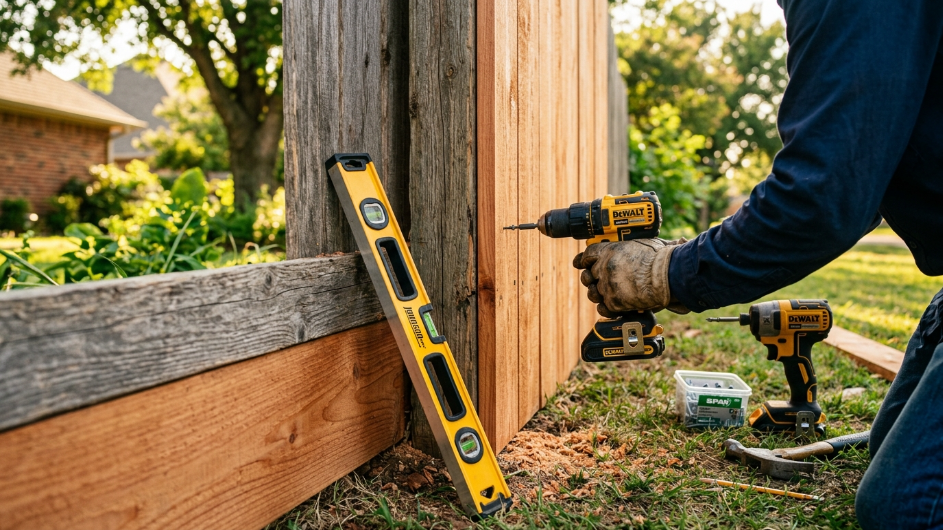
Wood and metal fences take a beating in central Oklahoma. Between hailstorms rolling off the plains and summer heat that swings past 95 degrees, a fence in Edmond rarely stays in perfect shape for long. Homeowners near Hafer Park or along the older streets close to downtown Edmond often notice the same warning signs: leaning posts, cracked pickets, or gates that no longer latch. Fence repair in Edmond OK tends to follow a seasonal pattern tied directly to the region’s weather swings, and knowing what to watch for can save a property owner both time and money.
Why Fences Wear Down Faster in Central Oklahoma

Oklahoma sits inside what climatologists call Tornado Alley, and the state also ranks among the top in the nation for hail frequency. According to NOAA storm data, Oklahoma County (which borders Edmond) averages several severe hail events per year, some producing stones over an inch in diameter. That kind of impact splits wood fibers and dents aluminum or chain-link panels. Add in freeze-thaw cycles each winter, and the soil around fence posts shifts enough to loosen even well-set footings.
Humidity plays a role too. Edmond’s clay-heavy soil retains moisture longer than sandy soil types, which speeds up wood rot at the base of posts. This is why most fence repair calls in the area involve the bottom third of a wooden post rather than the top rail.
Common Fence Damage Types
- Rotted or termite-damaged posts near the ground line
- Warped or split cedar pickets from repeated wet-dry cycles
- Rusted hinges and latches on metal gates
- Leaning fence sections after heavy wind events
- Cracked or shifted concrete footings
Materials Homeowners Choose in Edmond

Cedar remains the dominant fencing material in Edmond neighborhoods, largely because it resists insects better than pine and holds up reasonably well against Oklahoma’s humidity. Pressure-treated pine is the budget alternative, though it typically needs resealing every two to three years to avoid warping. Vinyl fencing has grown in popularity over the past decade because it doesn’t rot, but repair costs run higher when a panel cracks, since replacement sections must often be special-ordered.
Metal fencing, including wrought iron and chain-link, shows up frequently on properties bordering busier streets such as Bryant Avenue or Kelly Avenue. Chain-link is inexpensive to patch, but iron fencing requires rust treatment and repainting to prevent corrosion from spreading.
| Material | Average Lifespan | Typical Repair Issue |
|---|---|---|
| Cedar | 15-20 years | Post rot, warping |
| Pressure-treated pine | 10-15 years | Splitting, discoloration |
| Vinyl | 20-30 years | Cracked panels |
| Wrought iron | 20+ years | Rust, loose welds |
| Chain-link | 15-20 years | Bent posts, torn mesh |
National remodeling data from HomeAdvisor puts the average fence repair cost between $300 and $900 depending on the extent of damage and material, while a full section replacement can run higher. Costs in Oklahoma tend to sit slightly below the national median because labor rates in the region are generally lower than coastal metro areas, according to Bureau of Labor Statistics regional wage data.
When Repair Makes Sense Versus Full Replacement
Not every damaged fence needs to come down entirely. A single post with rot at the base can often be dug out, replaced, and reset without touching the rest of the fence line. The math changes when more than a third of the posts show damage, or when the original fence is already past its expected lifespan. At that point, patch repairs tend to cost nearly as much as replacement over a two-year span, since one weak section puts stress on neighboring panels.
Edmond’s median household income sits above the Oklahoma state average, and this shows in local remodeling patterns: homeowners here are somewhat more likely to opt for full fence replacement with upgraded materials rather than repeated patch jobs, based on regional home improvement spending trends tracked by the National Association of Home Builders.
Signs a Fence Needs Full Replacement
- More than 30% of posts show rot or insect damage
- The fence is already 15+ years old and made of untreated wood
- Multiple sections lean in different directions after storm damage
- Repair costs quoted at more than half the price of new installation
DIY Fence Fixes Versus Hiring a Professional
Small jobs, like tightening loose screws or replacing a single picket, are reasonable weekend projects for most homeowners. Post replacement is a different story. Setting a post correctly requires digging below the frost line, which in Oklahoma is typically around 12 to 18 inches, then packing the hole with concrete or gravel to prevent future shifting. Get the depth wrong, and the post will lean again within a season or two.
Gate repairs also trip people up more than expected. A gate that sags usually isn’t a hinge problem at all; it’s often the post itself pulling out of plumb under the gate’s weight. Diagnosing that correctly saves a second trip and a second repair bill.
Frequently Asked Questions
How much does fence repair typically cost?
Minor repairs such as picket replacement or hinge fixes generally cost under $200. Post replacement or larger section repairs often fall between $300 and $900, depending on materials and labor.
How long does a fence repair take?
Most single-post or panel repairs are completed in a day. Larger jobs involving multiple sections may take two to three days, particularly if concrete footings need time to cure.
Can a leaning fence be straightened without replacing it?
In many cases yes, provided the posts themselves aren’t rotted. Straightening involves resetting the post in fresh concrete and bracing it until it cures.
Does homeowners insurance cover fence damage?
Coverage varies by policy, but wind and hail damage are commonly covered perils under standard homeowners insurance in Oklahoma, given how frequently the state experiences severe storms.
Final Thoughts
Fence damage in Edmond usually traces back to weather, soil, or age rather than poor original construction. Catching the early signs, loose posts, cracked wood, rusted hardware, before a full section fails tends to be the difference between a small repair bill and a full replacement project.